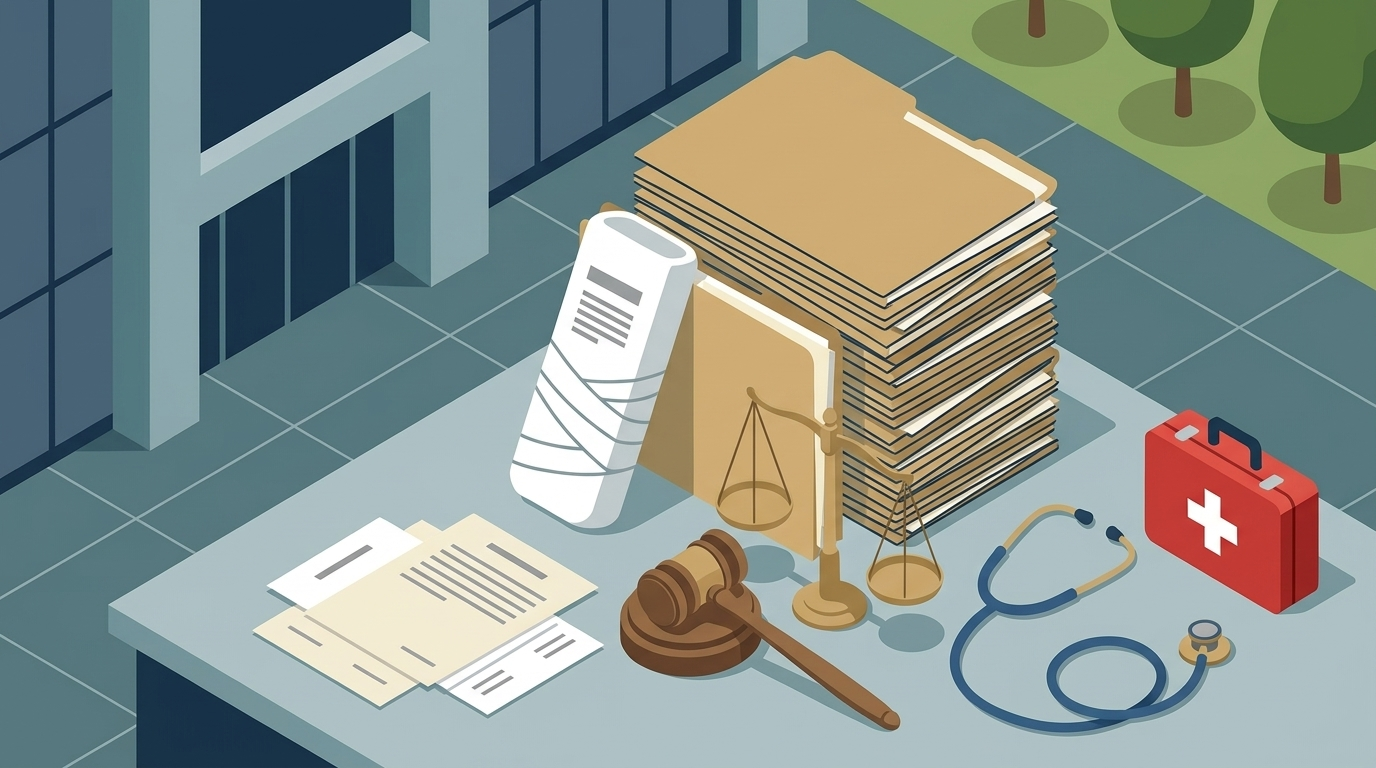
이 글은 일반적인 법률 정보 제공을 목적으로 작성되었습니다. 개별 사건에 대한 법률 조언이 아니며, 구체적인 법적 사안은 자격을 갖춘 법률 전문가와 상담하시기 바랍니다.
Injured at work? Learn how to file a workers compensation claim, gather evidence, and protect your rights in the US.
If you have suffered a workers compensation workplace injury, this guide is for you. Most US employees are covered by their state's workers' compensation system — a no-fault insurance program that provides benefits regardless of who caused the accident. Coverage applies to injuries that occur during the course of employment, including occupational illnesses developed over time.
Act quickly after an injury. Report the incident to your supervisor immediately and seek medical attention — your treating physician's records will become critical evidence. Document the scene with photos if possible, collect witness names and contact details, and keep copies of all medical reports, receipts, and correspondence.
Note the exact date, time, location, and circumstances of the injury. Your medical records must clearly link your condition to a workplace event or exposure. Prompt treatment also shows you took the injury seriously, which strengthens your claim.
Most states require you to formally notify your employer in writing within a set timeframe — commonly 30 to 90 days from the date of injury. Failure to meet this deadline can jeopardize your claim. Submit written notice to your employer or HR department, stating the date, nature, and location of the injury.
Your employer is generally required to provide you with a workers' compensation claim form (often called a DWC-1 or equivalent). Complete it accurately and retain a copy. Your employer must then report the injury to their insurer and, in many states, to the state workers' compensation board.
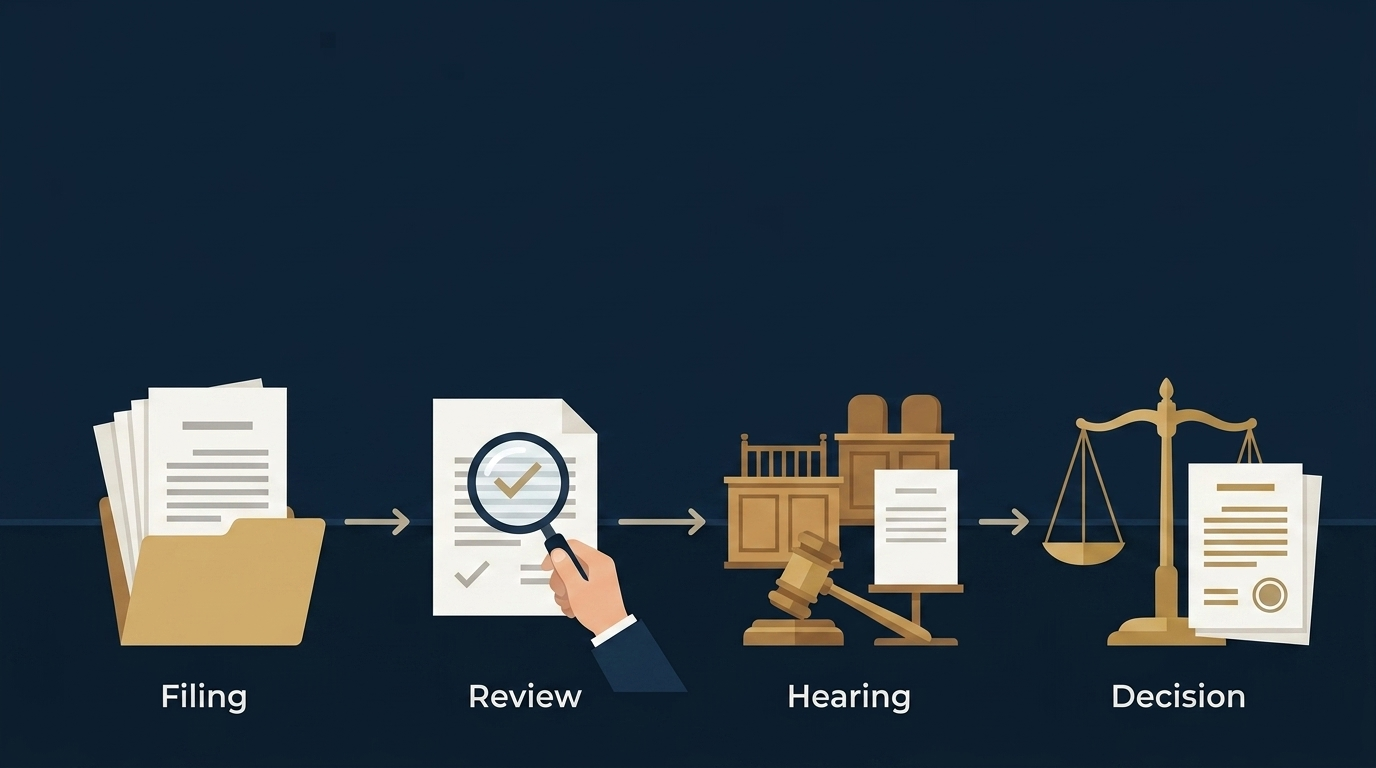
If your claim is accepted, the insurer coordinates your benefits. If your claim is denied or disputed, you may file a formal appeal or application with your state's workers' compensation board or commission. Each state has its own agency — for example, the California Workers' Compensation Appeals Board or the New York Workers' Compensation Board.
Filing deadlines, known as statutes of limitations, vary by state — typically one to three years from the date of injury or discovery of an occupational illness. Missing this window can permanently bar your claim, so act promptly.
Resolved claims may result in medical expense coverage, temporary or permanent disability payments, vocational rehabilitation, or a lump-sum settlement. Disputed claims proceed through hearings before a workers' compensation judge. If you disagree with a hearing outcome, further appeals may be available through state appellate bodies.
If your employer lacks required workers' compensation insurance, you may have additional remedies under state law, including civil action.
Retaliation against employees for filing workers' compensation claims is illegal in all US states. If you experience adverse employment action after filing, you may have a separate retaliation claim under state law.
Benefits typically include payment of medical expenses, a portion of lost wages during recovery, and compensation for permanent impairment. The exact amounts and formulas vary by state.
You have the right to appeal a denial through your state's workers' compensation board. Consulting an attorney experienced in workers' compensation at this stage is strongly advisable.
Yes. Most state programs cover illnesses or conditions directly caused by workplace conditions or exposures, such as repetitive strain injuries or chemical exposure, provided you can establish the connection.
Use ROY's free AI analysis to understand how the law applies to your specific situation.
This article provides general legal information only and does not constitute legal advice for your specific situation. Laws vary by state/territory. Consult a qualified lawyer for advice tailored to your circumstances.

팩트에 기반한 판례·사례입니다. '원문 보기'를 클릭하면 국가법령정보센터 등 공식 출처로 이동합니다.
Palsgraf v. Long Island Railroad Co. — proximate cause / foreseeability
Whether a defendant is liable for injuries to an unforeseeable plaintiff
The court held that a defendant is not liable for injuries to an unforeseeable plaintiff where the harm was not a reasonably foreseeable consequence of the negligent act.
※ Leading U.S. precedent — reference only
MacPherson v. Buick Motor Co. — manufacturer duty of care
Whether a manufacturer owes a duty of care to non-purchasers
The court held that manufacturers owe a duty of care to foreseeable users, not just direct purchasers, for products that are dangerous if negligently made.
※ Leading U.S. precedent — reference only
팩트에 기반한 판례·사례입니다. '원문 보기'를 클릭하면 국가법령정보센터 등 공식 출처로 이동합니다.
* 위 수치는 ROY AI의 유사 사건 분석 기반 추정치입니다. 개별 사건의 결과와 다를 수 있으며, 법률적 조언이나 결과 보장이 아닙니다.
지금 상황을 입력하면 AI가 쟁점을 정리하고, 유사 사례 기반 결과 분포와 전문 로펌 연결까지 한 번에 제공합니다.
이 문서는 일반적인 법률 정보 제공 목적으로 작성되었으며, 개별 사건에 대한 법률 자문, 법적 조언, 또는 결과 보장이 아닙니다. 구체적인 법적 사안에 대해서는 반드시 자격을 갖춘 법률 전문가와 상담하시기 바랍니다. ROY Legal Insights는 정보 제공 서비스이며, 법무법인이 아닙니다. 최초 발행일: 2026.04.07.