
이 글은 일반적인 법률 정보 제공을 목적으로 작성되었습니다. 개별 사건에 대한 법률 조언이 아니며, 구체적인 법적 사안은 자격을 갖춘 법률 전문가와 상담하시기 바랍니다.
Learn how divorce settlement property division works in the US, from gathering evidence to enforcing your final agreement.
If you are going through a divorce and own assets together, property division will be a central part of your case. This guide applies to married couples in the United States who need to divide real estate, bank accounts, retirement funds, vehicles, and debts. Whether you divorce by agreement or through contested court proceedings, understanding the process helps you protect your interests.
Start by compiling a complete picture of your marital estate. Collect documents such as mortgage statements, bank and investment account records, tax returns, retirement account statements, vehicle titles, and any business ownership records.
Also identify separate property — assets owned before marriage or received as gifts or inheritance — as these are generally excluded from division. Courts distinguish between marital property and separate property, so documentation matters.
Note that the United States uses two main frameworks: equitable distribution (used by most states), where assets are divided fairly but not necessarily equally, and community property (used in Arizona, California, Idaho, Louisiana, Nevada, New Mexico, Texas, Washington, and Wisconsin), where marital assets are generally split 50/50.
Once you decide to proceed with divorce, formal notice must be served on your spouse. This is called service of process. Your spouse receives a copy of the divorce petition and a summons requiring a response, typically within 20–30 days depending on your state.
If both parties agree on property terms, you may pursue an uncontested divorce, preparing a written marital settlement agreement that outlines how each asset and debt will be divided. This agreement is submitted to the court for approval.
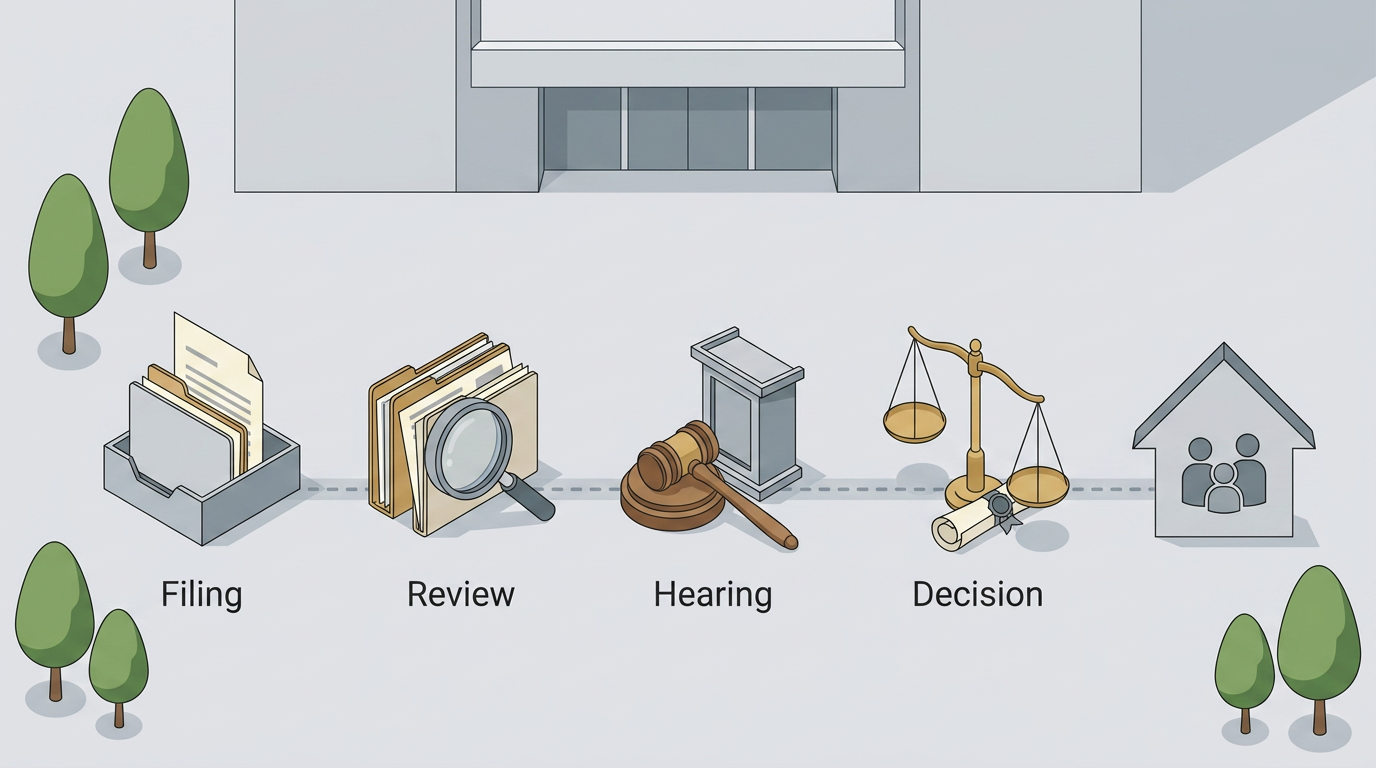
File your divorce petition (also called a complaint for dissolution of marriage) at your local family court or superior court. Filing fees typically range from $100 to $400 depending on the state and county.
If property division is disputed, the discovery phase begins — each party formally requests financial documents from the other. This may include depositions, interrogatories, and subpoenas for bank records. Courts may also appoint a neutral appraiser to value real estate or a business.
Be aware of your state's residency requirement, usually three to six months, before you can file. The statute of limitations does not apply to divorce itself, but acting promptly protects you from dissipation of assets.
Most divorce property disputes are resolved through negotiation or mediation before reaching trial. If parties agree, the settlement is incorporated into a final divorce decree — a legally binding court order.
If no agreement is reached, a judge will divide marital property after a hearing. Enforcement of the decree may require additional steps: for real estate, a deed transfer must be recorded; for retirement accounts, a Qualified Domestic Relations Order (QDRO) is needed to legally transfer funds without tax penalties.
Failure to comply with a property division order can result in contempt of court proceedings.
Uncontested divorces with agreed property terms can finalize in two to four months. Contested cases involving complex assets may take one to two years or longer.
Common outcomes include one spouse buying out the other's share, selling the home and splitting proceeds, or temporarily delaying sale if minor children are involved. A court will determine what is equitable if parties cannot agree.
Yes. Courts take non-disclosure seriously. If hidden assets are discovered, a judge may award a greater share to the other spouse or impose sanctions.
Legal representation is strongly recommended for any case involving significant assets, retirement funds, a business, or real estate. A family law attorney can help ensure your rights and financial interests are fully protected.
Use ROY's free AI analysis to understand how the law applies to your specific situation.
This article provides general legal information only and does not constitute legal advice for your specific situation. Laws vary by state/territory. Consult a qualified lawyer for advice tailored to your circumstances.


팩트에 기반한 판례·사례입니다. '원문 보기'를 클릭하면 국가법령정보센터 등 공식 출처로 이동합니다.
Obergefell v. Hodges — marriage equality
Whether the Constitution requires states to license and recognize same-sex marriage
The Supreme Court held that the Fourteenth Amendment requires states to license same-sex marriages and recognize those lawfully performed elsewhere.
※ Leading U.S. precedent — reference only
Troxel v. Granville — parental rights over visitation
The scope of parents’ right to direct their children’s upbringing
The Supreme Court held that parents have a fundamental right to direct their children’s upbringing, and a broad third-party visitation statute violated that right.
※ Leading U.S. precedent — reference only
팩트에 기반한 판례·사례입니다. '원문 보기'를 클릭하면 국가법령정보센터 등 공식 출처로 이동합니다.
* 위 수치는 ROY AI의 유사 사건 분석 기반 추정치입니다. 개별 사건의 결과와 다를 수 있으며, 법률적 조언이나 결과 보장이 아닙니다.
지금 상황을 입력하면 AI가 쟁점을 정리하고, 유사 사례 기반 결과 분포와 전문 로펌 연결까지 한 번에 제공합니다.
이 문서는 일반적인 법률 정보 제공 목적으로 작성되었으며, 개별 사건에 대한 법률 자문, 법적 조언, 또는 결과 보장이 아닙니다. 구체적인 법적 사안에 대해서는 반드시 자격을 갖춘 법률 전문가와 상담하시기 바랍니다. ROY Legal Insights는 정보 제공 서비스이며, 법무법인이 아닙니다. 최초 발행일: 2026.04.07.