
이 글은 일반적인 법률 정보 제공을 목적으로 작성되었습니다. 개별 사건에 대한 법률 조언이 아니며, 구체적인 법적 사안은 자격을 갖춘 법률 전문가와 상담하시기 바랍니다.
Learn how to pursue car accident claim compensation in the US, covering evidence, legal steps, timelines, and key insurance rules.
Motor vehicle accidents affect millions of Americans each year, often leaving victims facing medical bills, lost wages, and vehicle damage. Pursuing car accident claim compensation can feel overwhelming, especially while recovering from injuries. This guide walks you through the legal framework, what evidence to gather, and the steps to take to protect your rights.
Most states use a negligence-based system, meaning you must show another party failed to exercise reasonable care and that failure caused your injuries. Some states follow comparative negligence rules, which reduce your compensation by your percentage of fault. A few states still apply contributory negligence, which can bar recovery entirely if you share any fault.
About a dozen states operate under no-fault insurance systems, including Florida, Michigan, and New York. In these states, your own insurer pays your initial medical expenses and lost wages regardless of who caused the crash. In at-fault states, you typically file a claim against the responsible driver's liability insurer.
Every state imposes a deadline—known as a statute of limitations—for filing a personal injury lawsuit. Most states allow two to three years from the date of the accident, but some set shorter or longer periods. Missing this deadline generally bars you from pursuing compensation in court.


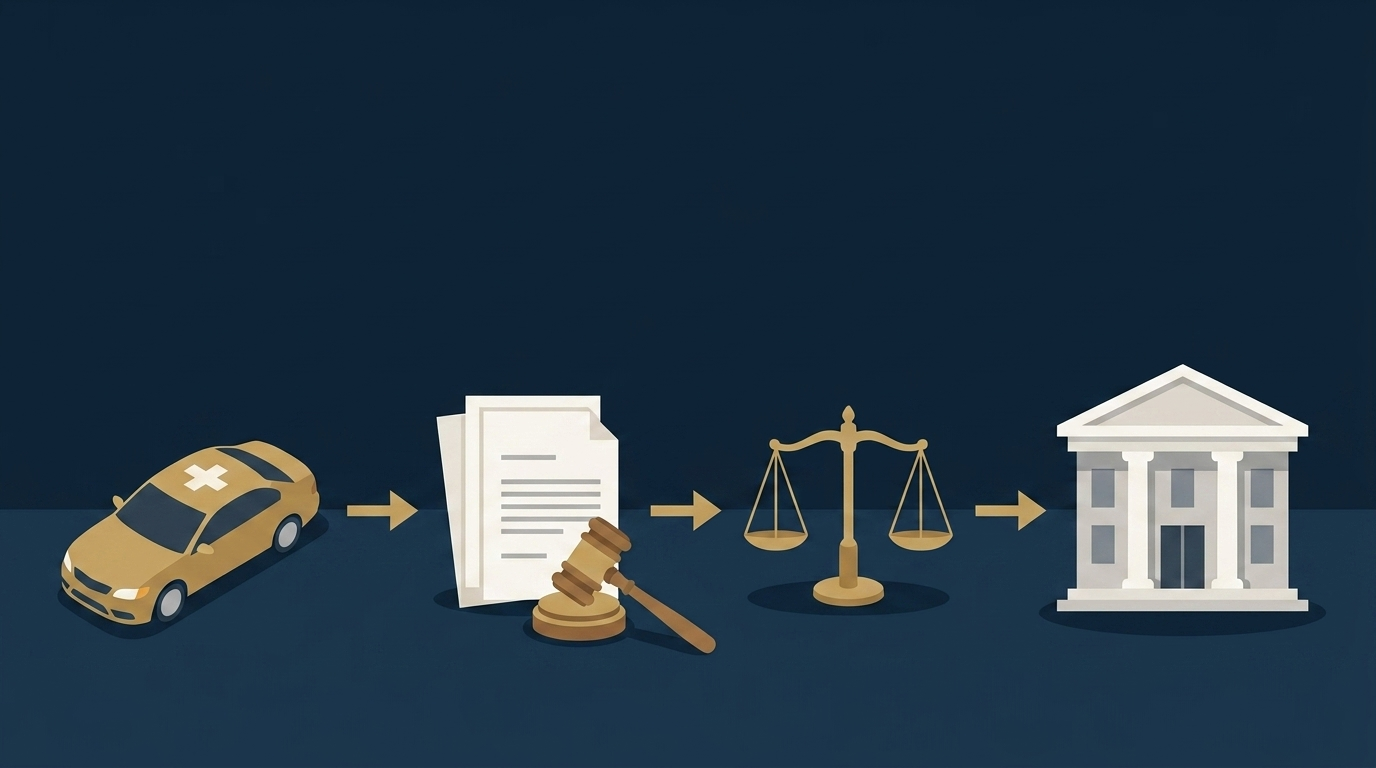
Call 911, ensure everyone's safety, and wait for a police report to be filed. See a doctor as soon as possible—even if injuries seem minor—since medical records link your injuries directly to the accident.
Report the accident to your own insurance company promptly, as most policies require timely notice. Collect all evidence listed above and keep everything organized in a dedicated folder.
Submit a claim to the at-fault driver's insurer (or your own in no-fault states). The insurer will assign an adjuster to evaluate damages. You may receive a settlement offer—review it carefully before accepting, as early offers often undervalue future medical costs.
If your injuries are serious, liability is disputed, or a settlement cannot be reached, consulting a personal injury attorney is worth considering. Many work on a contingency fee basis, meaning they are paid only if you recover compensation.
If negotiations fail, your attorney may file a lawsuit before the statute of limitations expires. Most cases still settle before trial through mediation or continued negotiation.
Simple claims with clear liability and minor injuries may settle within a few weeks to months. Complex cases involving serious injuries, disputed fault, or litigation can take one to several years. The timeline depends on medical recovery, insurer cooperation, and court schedules.
Compensation—called damages—can include medical expenses, future medical care, lost wages, loss of earning capacity, vehicle repair or replacement, and pain and suffering. Some states also allow punitive damages in cases involving reckless or intentional conduct.
Early settlement offers from insurers may not account for ongoing treatment, future surgeries, or long-term income loss. Once you accept a settlement, you typically cannot seek additional compensation. Reviewing any offer carefully, ideally with legal guidance, is generally advisable.
If the at-fault driver has no insurance, your own uninsured motorist (UM) coverage may cover your damages. Most states require insurers to offer UM coverage, though not all require drivers to carry it. Check your own policy details carefully.
Use ROY's free AI analysis to understand how the law applies to your specific situation.
This article provides general legal information only and does not constitute legal advice for your specific situation. Laws vary by state/territory. Consult a qualified lawyer for advice tailored to your circumstances.
팩트에 기반한 판례·사례입니다. '원문 보기'를 클릭하면 국가법령정보센터 등 공식 출처로 이동합니다.
Palsgraf v. Long Island Railroad Co. — proximate cause / foreseeability
Whether a defendant is liable for injuries to an unforeseeable plaintiff
The court held that a defendant is not liable for injuries to an unforeseeable plaintiff where the harm was not a reasonably foreseeable consequence of the negligent act.
※ Leading U.S. precedent — reference only
MacPherson v. Buick Motor Co. — manufacturer duty of care
Whether a manufacturer owes a duty of care to non-purchasers
The court held that manufacturers owe a duty of care to foreseeable users, not just direct purchasers, for products that are dangerous if negligently made.
※ Leading U.S. precedent — reference only
팩트에 기반한 판례·사례입니다. '원문 보기'를 클릭하면 국가법령정보센터 등 공식 출처로 이동합니다.
* 위 수치는 ROY AI의 유사 사건 분석 기반 추정치입니다. 개별 사건의 결과와 다를 수 있으며, 법률적 조언이나 결과 보장이 아닙니다.
지금 상황을 입력하면 AI가 쟁점을 정리하고, 유사 사례 기반 결과 분포와 전문 로펌 연결까지 한 번에 제공합니다.
이 문서는 일반적인 법률 정보 제공 목적으로 작성되었으며, 개별 사건에 대한 법률 자문, 법적 조언, 또는 결과 보장이 아닙니다. 구체적인 법적 사안에 대해서는 반드시 자격을 갖춘 법률 전문가와 상담하시기 바랍니다. ROY Legal Insights는 정보 제공 서비스이며, 법무법인이 아닙니다. 최초 발행일: 2026.04.07.