View Contents+

Understand property purchase conveyancing in Australia — key legal issues, required documents, and step-by-step process explained clearly.
Buying a residential property is one of the most significant legal and financial commitments most Australians will make. Property purchase conveyancing — the legal process of transferring ownership from seller to buyer — involves contracts, title searches, finance conditions, and settlement procedures. This guide explains what to expect at each stage, what documents you need, and the key legal concepts involved.
§1Key Legal Issues
§2Contract of Sale and Cooling-Off Rights
The Contract of Sale is the binding document that sets out the terms of your purchase, including price, settlement date, and any special conditions. In most states and territories, buyers have a cooling-off period (typically 2–5 business days) during which they can withdraw, though a penalty (usually 0.25% of the purchase price) may apply. Cooling-off rights do not apply in all situations — for example, properties sold at auction in most jurisdictions.
§3Title Search and Encumbrances
A title search confirms the seller legally owns the property and reveals any encumbrances — legal claims or restrictions registered against the title, such as mortgages, easements, or caveats. Your conveyancer will conduct this search and advise on anything that may affect your use or ownership of the property. Undisclosed encumbrances can create significant legal and financial problems after settlement.
§4Limitation Periods and Disclosure Obligations
Sellers have legal disclosure obligations that vary by state. In Victoria, a Vendor's Statement (Section 32) must be provided before signing. In NSW, a Contract for Sale must include prescribed documents. Failure to disclose can give buyers rights to rescind the contract. Time limits apply — seek legal advice promptly if you believe a disclosure obligation has been breached.
§5What Evidence and Documents You Need
- Signed Contract of Sale (including all special conditions)
- Vendor's Statement or Section 32 Statement (Victoria) / prescribed documents (NSW)
- Certificate of Title or title search results
- Mortgage or finance approval letter from your lender
- Building and pest inspection reports
- Strata inspection report (for apartments/units)
- Land tax clearance certificate
- Council rates notice (confirming no outstanding amounts)
- Water and utility account details
- Zoning certificate from local council
- Stamp duty (transfer duty) assessment notice
- Identification documents (passport or driver's licence)
- Transfer of Land or Transfer of Title form
- First Home Owner Grant application (if applicable)
- Proof of deposit payment (bank statements or transfer records)
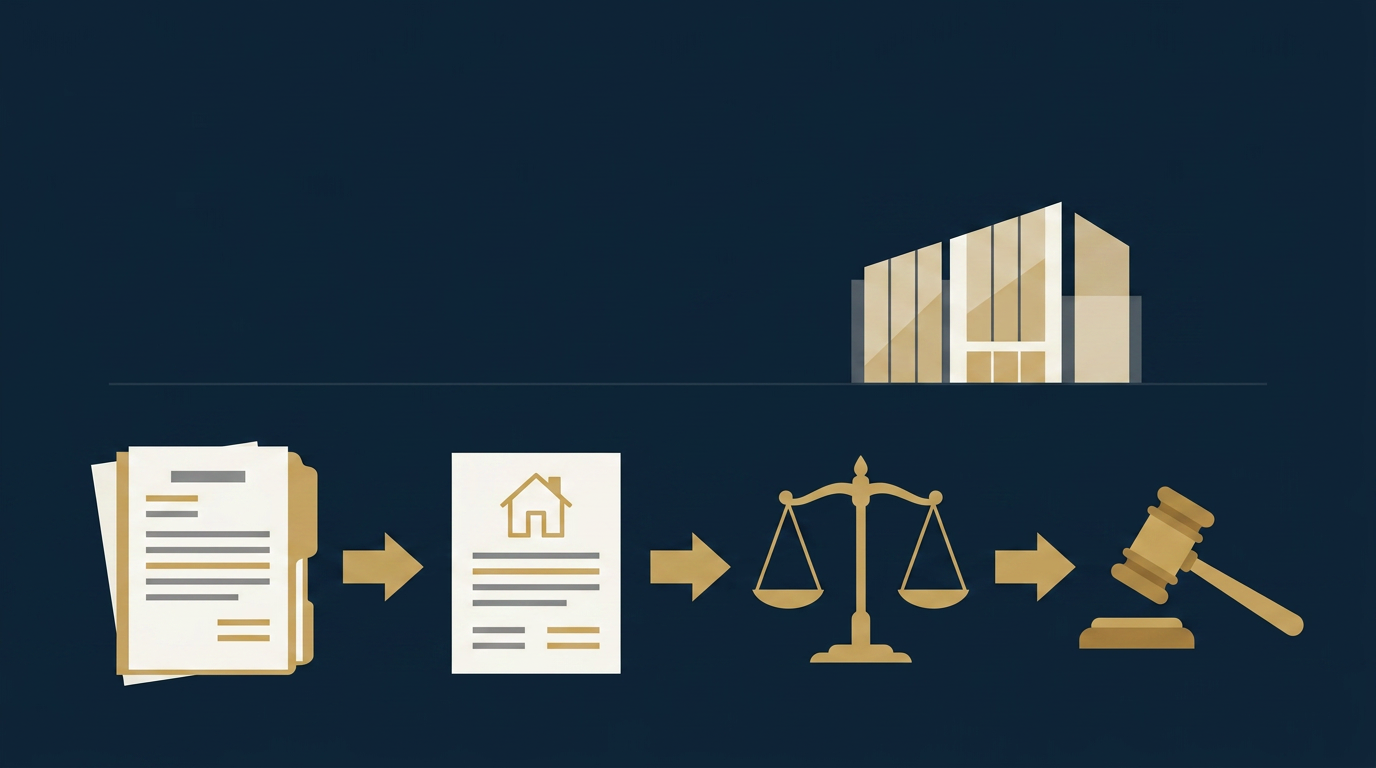
§6Step-by-Step Process
§7How long does property purchase conveyancing take in Australia?
The conveyancing process typically takes 4 to 12 weeks from contract signing to settlement, depending on the agreed settlement date and any delays with finance or searches. Complex transactions or disputed issues can take longer.
§8What is stamp duty and when must I pay it?
Stamp duty (also called transfer duty) is a state government tax on property purchases. The amount varies by state, property value, and buyer type. First home buyers may be eligible for exemptions or concessions. It is generally payable at or before settlement.
§9Can I pull out of a property purchase after signing?
You may withdraw during the cooling-off period (where applicable) subject to a small penalty. After cooling-off expires and all conditions are satisfied, withdrawing may result in forfeiture of your deposit and potential legal action by the seller for breach of contract.
§10What happens if the seller fails to disclose something important?
Depending on what was not disclosed and which state you are in, you may have the right to rescind the contract or seek compensation. Time limits apply to exercising these rights, so seek legal advice as soon as you discover an issue.
§11Do I need a conveyancer if I am also getting a mortgage?
Yes. Even if your lender has its own solicitors, they act for the lender — not for you. You need independent legal representation to protect your interests throughout the transaction.
Use ROY's free AI analysis to understand how the law applies to your specific situation.
This article provides general legal information only and does not constitute legal advice for your specific situation. Laws vary by state/territory. Consult a qualified lawyer for advice tailored to your circumstances.


Frequently Asked Questions
Q. Step 1: Engage a Conveyancer or Solicitor+
Before signing anything, engage a licensed conveyancer or property solicitor. They will review the contract, explain your rights, conduct title and property searches, and advise on any risks. Costs typically range from $800 to $2,500 depending on complexity and state.
Q. Step 2: Review and Sign the Contract+
Your conveyancer will negotiate any amendments to the contract, such as adding a finance clause or extending settlement. Once both parties sign, the contract becomes binding subject to any conditions. Ensure you understand your cooling-off rights before signing.
Q. Step 3: Conduct Due Diligence and Searches+
Order building and pest inspections and review all search results your conveyancer obtains. Address any issues — such as unapproved structures or encumbrances — before conditions expire. Your lender will also conduct a property valuation during this phase.
Q. Step 4: Satisfy Finance and Conditions+
If a finance condition applies, you must formally obtain unconditional loan approval within the agreed timeframe. Failure to meet conditions correctly can put your deposit at risk. Notify your conveyancer immediately if there are any delays.
Q. Step 5: Settlement+
At settlement, your conveyancer coordinates with the seller's conveyancer and your lender to transfer funds and register the title in your name. In most states, this now occurs electronically via PEXA or Sympli. You receive the keys and become the legal owner upon settlement completion.
Related Cases & Similar Precedents
These are fact-based cases and precedents. Click 'View Source' to access official sources.
Mabo v Queensland (No 2) — recognition of native title
Whether native title is recognised at common law
The High Court held that native title exists and is recognised under Australian common law, overturning the doctrine of terra nullius.
※ Leading Australian precedent — reference only
These are fact-based cases and precedents. Click 'View Source' to access official sources.
Outcome Distribution for General Cases
* These figures are estimates based on ROY AI similar-case analysis. Results may differ for individual cases and do not constitute legal advice or a guarantee of outcome.
Let ROY organise your case
before you go it alone
Enter your situation and AI will map out the key issues, outcome distribution from similar cases, and connect you to specialist firms — all in one step.
Related Legal Guides
This document is provided for general informational purposes only and does not constitute legal advice, legal counsel, or a guarantee of outcome for any specific case. For specific legal matters, please consult a qualified Australian legal practitioner. ROY Legal Insights is an information service and not a law firm. First published: 2026.04.07.