View Contents+

Learn how Australian IP infringement law works, what evidence you need, and the steps to protect your trademark or copyright.
Intellectual property (IP) infringement occurs when someone uses your protected creative work, brand, or invention without authorisation. In Australia, IP rights are governed primarily by the Trade Marks Act 1995 (Cth) and the Copyright Act 1968 (Cth). This guide covers key legal issues, the evidence you need, and the practical steps to take whether you are a business owner, creator, or someone accused of infringement.
§1Key Legal Issues
What counts as trademark infringement? Trademark infringement occurs when a person uses a sign substantially identical or deceptively similar to a registered trademark in relation to similar goods or services, without the owner's consent. Registration with IP Australia gives you exclusive rights nationwide. Unregistered marks may still attract protection under Australian Consumer Law if the use constitutes misleading or deceptive conduct.
What counts as copyright infringement? Copyright in Australia arises automatically upon creation of original works — there is no registration requirement. Infringement occurs when someone reproduces, communicates, or adapts a substantial part of your work without a licence. "Substantial" refers to quality, not just quantity, so copying a distinctive element can still infringe even if it is brief.
What are the limitation periods? For copyright infringement, civil claims generally must be brought within six years of the infringing act under the Limitation Act applicable in each state or territory. Trademark claims are also subject to limitation periods that vary by jurisdiction. Acting promptly is essential to preserve your rights.
§2What Evidence and Documents You Need
- Certificate of trademark registration from IP Australia
- Proof of first use or dates of trademark use (invoices, advertising records)
- Copies of the original copyrighted work with creation dates
- Screenshots or recordings of the infringing material with timestamps
- URLs, social media posts, or product listings showing infringement
- Samples or photographs of infringing products
- Records of consumer confusion or complaints received
- Communications from the infringer (emails, messages)
- Evidence of your business's reputation and market presence
- Sales records showing financial loss or damage
- Any licensing agreements previously entered into
- Cease and desist letters already sent and responses received
- Expert reports (e.g. brand or market expert analysis)
§3Step-by-Step Process
Frequently Asked Questions
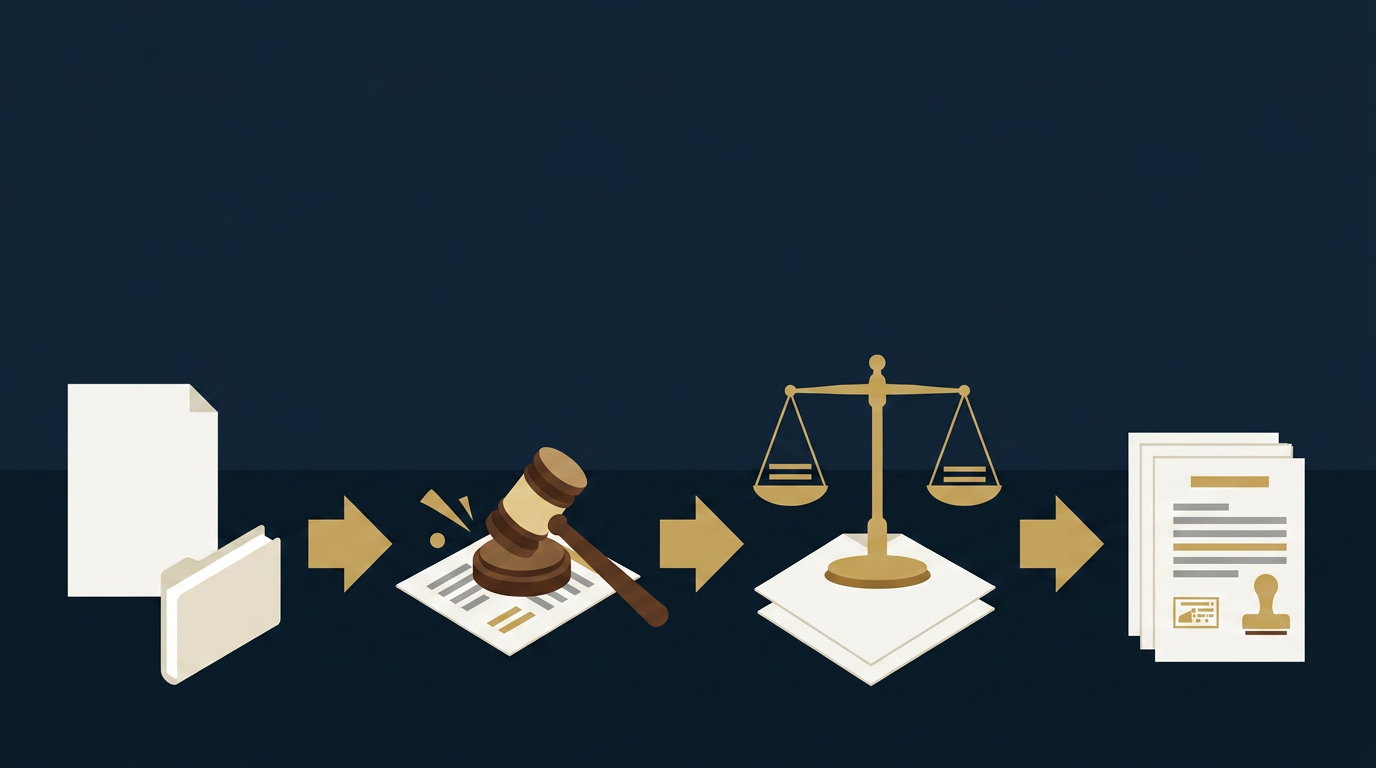
Q. Step 1: Confirm Your IP Rights+
Verify that your trademark is registered and in force via the IP Australia Trade Mark Search, or confirm that your copyright work is original and fixed in material form. Identify the specific rights that have been infringed and gather your ownership evidence.
Q. Step 2: Document the Infringement+
Capture all evidence of the infringing activity before it disappears. Take dated screenshots, purchase infringing products as samples, and record any instances of consumer confusion. Organised, timestamped evidence strengthens your position significantly.
Q. Step 3: Send a Cease and Desist Letter+
A formal cease and desist letter notifies the infringer of your rights and demands they stop the conduct. This step can resolve many disputes without litigation and demonstrates good faith. A lawyer can draft this letter to ensure it is legally accurate and strategically sound.
Q. Step 4: Consider Alternative Dispute Resolution+
Mediation or negotiation can resolve IP disputes faster and at lower cost than court proceedings. IP Australia offers dispute resolution services for trademark matters. Many parties reach licensing arrangements or settlements at this stage.
Q. Step 5: Commence Legal Proceedings if Necessary+
If the infringement continues, you may file proceedings in the Federal Court or Federal Circuit and Family Court of Australia. Available remedies include injunctions (court orders to stop the conduct), damages or an account of profits, and delivery up of infringing goods.
Q. FAQ: How much does it cost to pursue an IP infringement claim in Australia?+
Costs vary widely depending on complexity. Cease and desist letters may cost a few hundred to a few thousand dollars in legal fees. Litigation in the Federal Court can range from tens of thousands to hundreds of thousands of dollars. Many IP lawyers offer an initial consultation, and some matters may be suitable for fixed-fee arrangements.
Q. FAQ: Can I claim damages if I have not registered my trademark?+
Registration significantly strengthens your position. Without registration, you may still pursue a claim under the Australian Consumer Law for misleading or deceptive conduct (known as passing off at common law), but these claims are harder to establish and require proof of an established reputation in your mark.
Q. FAQ: Does copyright protection apply to my website content and logo?+
Original written content, images, and design elements on your website are automatically protected by copyright as soon as they are created. However, a logo that functions as a brand identifier is better protected by trademark registration, which provides clearer exclusive rights and easier enforcement options.
Q. FAQ: What is an injunction and how does it help?+
An injunction is a court order requiring the infringer to immediately stop the infringing conduct. It is often the most urgent remedy sought because it halts ongoing harm to your brand or business while the broader dispute is resolved. Courts may grant urgent interim injunctions before a full hearing in serious cases.
Use ROY's free AI analysis to understand how the law applies to your specific situation.
This article provides general legal information only and does not constitute legal advice for your specific situation. Laws vary by state/territory. Consult a qualified lawyer for advice tailored to your circumstances.
Related Cases & Similar Precedents
These are fact-based cases and precedents. Click 'View Source' to access official sources.
Codelfa Construction Pty Ltd v State Rail Authority (NSW) — frustration & contract interpretation
When a contract is frustrated and how terms are construed
The High Court held the contract was frustrated where an injunction made performance radically different, and set out principles for construing contracts.
※ Leading Australian precedent — reference only
These are fact-based cases and precedents. Click 'View Source' to access official sources.
Outcome Distribution for General Cases
* These figures are estimates based on ROY AI similar-case analysis. Results may differ for individual cases and do not constitute legal advice or a guarantee of outcome.
Let ROY organise your case
before you go it alone
Enter your situation and AI will map out the key issues, outcome distribution from similar cases, and connect you to specialist firms — all in one step.
Related Legal Guides
This document is provided for general informational purposes only and does not constitute legal advice, legal counsel, or a guarantee of outcome for any specific case. For specific legal matters, please consult a qualified Australian legal practitioner. ROY Legal Insights is an information service and not a law firm. First published: 2026.04.07.